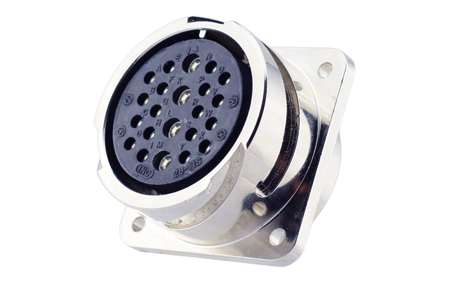
Amerline offers COTS connectors that are interchangeable with MIL-SPEC connectors. Rigorously tested for durability, environmental resistance, and reliability, these connectors meet essential standards, making them ideal for diverse applications. By ensuring compatibility with MIL-SPEC components, Amerline streamlines operations while reducing procurement costs.
What Is Shell Size in a Circular Connector?
Key Takeaways
- Shell size is a two-digit number that designates a connector's outer diameter, calculated as shell size × 0.0625 inches.
- Shell size determines how much room is available for contacts, backshells, and accessories.
- Contact arrangement (also called insert arrangement) defines the specific layout and count of contacts within a given shell size.
- Choosing the right shell size means weighing circuit count, wire gauge, power vs. signal mix, and physical space constraints together.
- Amerline's AEC line offers a range of standard shell sizes, plus custom-designed solutions when standard options don't fit.
Shell size is the two-digit number that specifies the outer diameter of a circular connector's housing, measured in 1/16-inch increments. It's one of the first specs an engineer or buyer needs to nail down. Shell size controls how many contacts can fit inside the connector and which backshells and accessories will mate with it.
Selecting the right shell size is one of the more important decisions in the connector design process. It's shaped by a mix of variables: circuit count, wire gauge, power vs. signal mix, and backshell or accessory compatibility, to name a few considerations.
Amerline's AEC circular connectors follow the same shell size conventions as their MIL-SPEC equivalents.
How Is Connector Shell Size Defined?
The shell is the outer metal housing of the connector. Shell size is a two-digit numerical designation, not a direct measurement in inches, that indicates the housing's outer diameter.
The formula is straightforward: Shell size number × 0.0625" = outer diameter.
A shell size 24 works out to a 1.50" outer diameter (24 × 0.0625).
You'll sometimes see the number followed by a letter suffix (e.g., 10S), which indicates a sub-variant within that size class rather than a different diameter.
Why Shell Size Matters for Connector Design
Shell size determines the physical space available for the connector insert and its contacts. A larger shell can accommodate more contacts, or fewer contacts at a heavier gauge for higher current-carrying capacity. A smaller shell fits fewer, finer signal contacts.
Shell size also governs which backshells and accessories are compatible. Cable clamps, strain relief fittings, and sealing boots are all built to a specific shell size's thread and diameter. That compatibility extends to how the connector performs once installed.
How Shell Size Relates to a Connector's Contact Arrangement
A contact arrangement (also called an insert arrangement) is the standardized layout of pin and socket positions inside a connector's insert. It's a blueprint of how many contacts fit, where each one sits, and what size it is. Each arrangement is identified by a number tied to a specific pattern, so two connectors built to the same arrangement number will have matching contact layouts across different manufacturers.
Each shell size has a defined set of approved contact arrangements that determine the number, layout, and size of contacts inside the shell. The right contact arrangement depends on the number of circuits you need, the wire gauge, and your mix of power versus signal contacts.
Multiple contact arrangements can fit a single shell size, so the selection order matters. Choose shell size first, based on physical fit and current-carrying capacity, then choose the contact arrangement based on circuit count and wire gauge.
Shell Size vs. Contact Arrangement
|
Shell Size Defines... |
Contact Arrangement Defines... |
|
Outer diameter of the housing |
Number of contacts in the insert |
|
Physical space envelope |
Contact size (AWG) in each position |
|
Backshell/accessory compatibility |
Pin/socket layout pattern |
|
Current-carrying capacity range |
Power vs. signal vs. mixed configuration |
What Factors Determine Connector Shell Size Selection?
- Number of circuits — More circuits require a larger shell to fit more contact positions. If your design is likely to grow (additional sensors, added functionality down the line), it's worth sizing with some headroom rather than maxing out the shell right away.
- Wire gauge — Heavier gauge wire (lower AWG number) requires larger contacts, which in turn calls for a larger shell. Even a low circuit count can push you toward a bigger shell if the application demands high-current contacts.
- Power vs. signal mix — Power contacts take up more space than signal contacts, so a shell carrying both needs enough room for each without compromising spacing or insulation. Mixed-use connectors often need a size or two larger than an all-signal design with the same circuit count.
- Physical envelope — Space constraints on the panel, housing, or cable assembly may cap the maximum shell size you can use, regardless of what the electrical requirements call for. Confirm envelope constraints early, before the electrical spec locks in a shell size that won't physically fit.
- Backshell compatibility — Shell size must match the rear accessory's thread geometry, or you risk improper sealing and strain relief. This is especially critical when retrofitting a connector into an existing assembly.
Shell Size in Amerline's AEC Connector Line
Amerline's AEC circular connector line offers a variety of shell sizes across its product families — including AEC 5015, AEC 26482, AEC 22992, and AEC 95234 — to accommodate a wide range of circuit counts, wire gauges, and application needs.
When a standard shell size doesn't cover what an application requires, Amerline can provide custom-designed solutions, so you're not limited to what's on the shelf.
Frequently Asked Questions About Shell Size
What is shell size in a connector?
Shell size is a two-digit number that designates the outer diameter of a circular connector's housing. To find the diameter in inches, multiply the shell size number by 0.0625. Shell size determines how many contacts the connector can hold and which backshells and accessories are compatible with it.
How is connector shell size measured?
Connector shell size is a nominal designation based on 1/16-inch increments of the outer diameter. Shell size 8 corresponds to 0.50 inches (8/16), shell size 16 corresponds to 1.00 inch, and so on.
What is the difference between shell size and contact arrangement?
Shell size refers to the physical outer diameter of the connector housing. Contact arrangement refers to the specific layout, number, and size of contacts within the insert inside that housing. You choose shell size first based on physical fit and current needs, then select a contact arrangement based on the number of circuits and wire gauges required.
How do I know which shell size I need?
Start by identifying the number of circuits required and the wire gauge for each. Heavier gauge wire needs larger contacts, which requires a larger shell. Physical space constraints at the mounting point may also limit your maximum shell size. Additionally, the shell size of your connector must match the shell size of any backshell or accessory you plan to use.
Can Amerline provide shell sizes outside their standard offering?
Yes. While Amerline's AEC line covers a range of standard shell sizes across its product families, custom-designed solutions are available for applications that fall outside the standard offering.