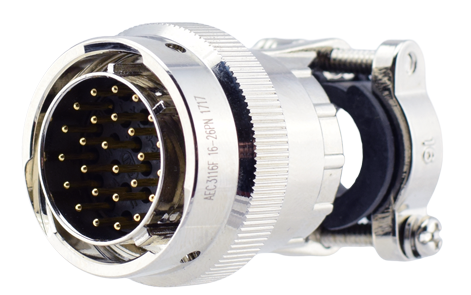
Amerline provides connector potting solutions for applications where sealing, durability, and long-term reliability are non-negotiable. Potting, along with overmolding, can be applied to standard and custom connector solutions to match specific environmental and mechanical requirements. Amerline delivers consistent performance in the field through aligning design, configuration, and sealing methods.
Connector Potting
Potting is used across the connector industry to protect vulnerable termination areas from environmental exposure and mechanical stress. It is commonly applied in rugged applications where long-term reliability is critical.
What Is Connector Potting?
Connector potting is the process of filling the rear portion of a connector—where wires are terminated to contacts—with a protective compound. The compound surrounds the conductors and creates an environmentally sealed barrier that protects the most exposed, failure-prone part of the cable assembly.
In practice, potting serves several functions at once:
- Seals the rear termination area against environmental ingress
- Electrically insulates conductors
- Stabilizes wires to reduce movement and fatigue
- Adds localized strain relief at the cable entry point
- Extends the overall service life of the connector assembly
From a process standpoint, potting involves preparing the assembly, positioning the cable, dispensing the compound into the rear cavity, and letting it cure into a solid, protective mass. Proper fill, adhesion, and air control are necessary to achieve a reliable seal.
What Types of Potting Compounds Are Used?
Common potting compounds include epoxy, polyurethane, and silicone, each suited to different application demands.
- Epoxy resins provide strong adhesion, chemical resistance, and rigid structural support, making them ideal for harsh environments.
- Polyurethanes offer a balance of sealing performance and flexibility, helping absorb vibration and mechanical stress.
- Silicones are best for extreme temperatures and applications requiring high flexibility, though they typically provide lower mechanical strength.
Material selection when sealing this portion of the connector body depends on operating conditions, required flexibility, and compatibility with connector materials.
Why Connector Potting Matters in Harsh Environments
In many applications, connector failures do not originate at the mating interface; they begin at the rear termination area. Small gaps around conductors can allow moisture, dirt, and other contaminants to enter the area, leading to corrosion, insulation breakdown, or intermittent electrical faults.
The impenetrable seal that potting creates at the back of the connector is especially important in harsh environments exposed to:
- Water and humidity
- Road salt or marine conditions
- Dust, dirt, and debris
- Chemicals and oils
- Shock and continuous vibration
These risks are common in military equipment, trailers, heavy vehicles, outdoor power infrastructure, and industrial machinery, where connectors are exposed to environmental and mechanical demands.
Cable Connector Potting vs. Overmolding
Whereas potting is an internal structural process, overmolding is an external one. A thermoplastic or elastomer material is molded over the connector-to-cable interface, forming a continuous outer layer. Overmolding is designed to enhance strain relief, impact resistance, and bend protection, helping the assembly withstand repeated mechanical stress and handling.
From a functional standpoint, the distinction is straightforward:
- Potting → internal environmental sealing and ingress prevention
- Overmolding → external mechanical protection and strain relief
In demanding environments, the two methods can be used together. Potting protects the integrity of the electrical terminations by sealing out contaminants, while overmolding reinforces the cable interface against bending, pulling, and vibration. This combined approach improves both environmental resilience and mechanical durability, resulting in a more stable and longer-lasting interconnect system.
How Connector Type & Design Affect the Potting Success
Potting performance is influenced by the underlying connector design and how well it aligns with the cable and application requirements. Even high-quality materials can underperform if the connector geometry and cable layout are not optimized for proper fill and adhesion:
- Rear cavity geometry and fill volume: Adequate and well-defined cavity space allows the compound to flow and encapsulate terminations evenly. Undersized or irregular cavities can restrict flow and lead to incomplete sealing.
- Contact spacing and insert configuration: Tight spacing or complex insert layouts can create shadowed regions where compound penetration is limited, increasing the likelihood of micro-voids or incomplete coverage.
- Wire routing and cable diameter transitions: Poorly managed conductor routing or abrupt diameter changes can trap air and disrupt flow paths. Consistent spacing and controlled bundling improve compound distribution.
- Surface condition and material compatibility: Adhesion depends on material selection and surface preparation. Connector housings and inserts must be compatible with the potting compound to prevent delamination over time.
- Internal geometry complexity and void risk: Features such as sharp corners, stepped cavities, or tight clearances increase the risk of entrapment. This can compromise sealing integrity under thermal cycling or pressure changes.
Equally important is ensuring the connector is properly matched to the cable and application. Customization of insert layouts, rear geometries, and cable interfaces allows the potting process to function as intended rather than compensating for mismatches. When the connector, cable, and sealing method are aligned from the outset, potting becomes a controlled and repeatable process.
Frequently Asked Questions About Connector Potting
Does potting make a connector waterproof?
Potting improves sealing at the rear termination area by eliminating voids where moisture and contaminants can enter. Waterproof performance depends on the complete connector system, including interface seals, mating integrity, and enclosure design.
Does potting affect temperature resistance?
Potting can enhance temperature resistance when the compound is properly selected for the application. However, differences in thermal expansion between materials must be considered to avoid stress that could impact system reliability.
Is connector potting permanent, and can it be repaired or reworked?
Most potting compounds form a permanent bond once cured, creating a solid encapsulation around the terminations. As a result, rework is difficult and often requires removing or damaging components to access the contacts. For this reason, potting is typically applied after the assembly is fully validated.
What is the difference between potting and backpotting?
Potting involves filling a larger rear cavity to fully encapsulate the termination area and surrounding conductors. Backpotting is more targeted, focusing specifically on sealing wire entry points without filling the entire connector interior. The choice depends on the level of environmental protection and available space within the connector.
Can connector potting replace strain relief or overmolding?
Potting provides localized mechanical support by stabilizing wires within the connector, but it does not protect against external bending, pulling, or repeated flexing. Overmolding adds a structural protective layer that improves strain relief and mechanical durability at the cable interface. In many applications, both methods are used together to address different failure modes.
How do I know if my connector design is a good candidate for potting?
Potting is well-suited for connectors where rear terminations are exposed to moisture, contaminants, vibration, or pressure changes. Designs with defined rear cavities, manageable wire routing, and compatible materials tend to yield the most consistent results. Evaluating these factors early improves process reliability and reduces variability.